Master Service Dog Laws for Your Business
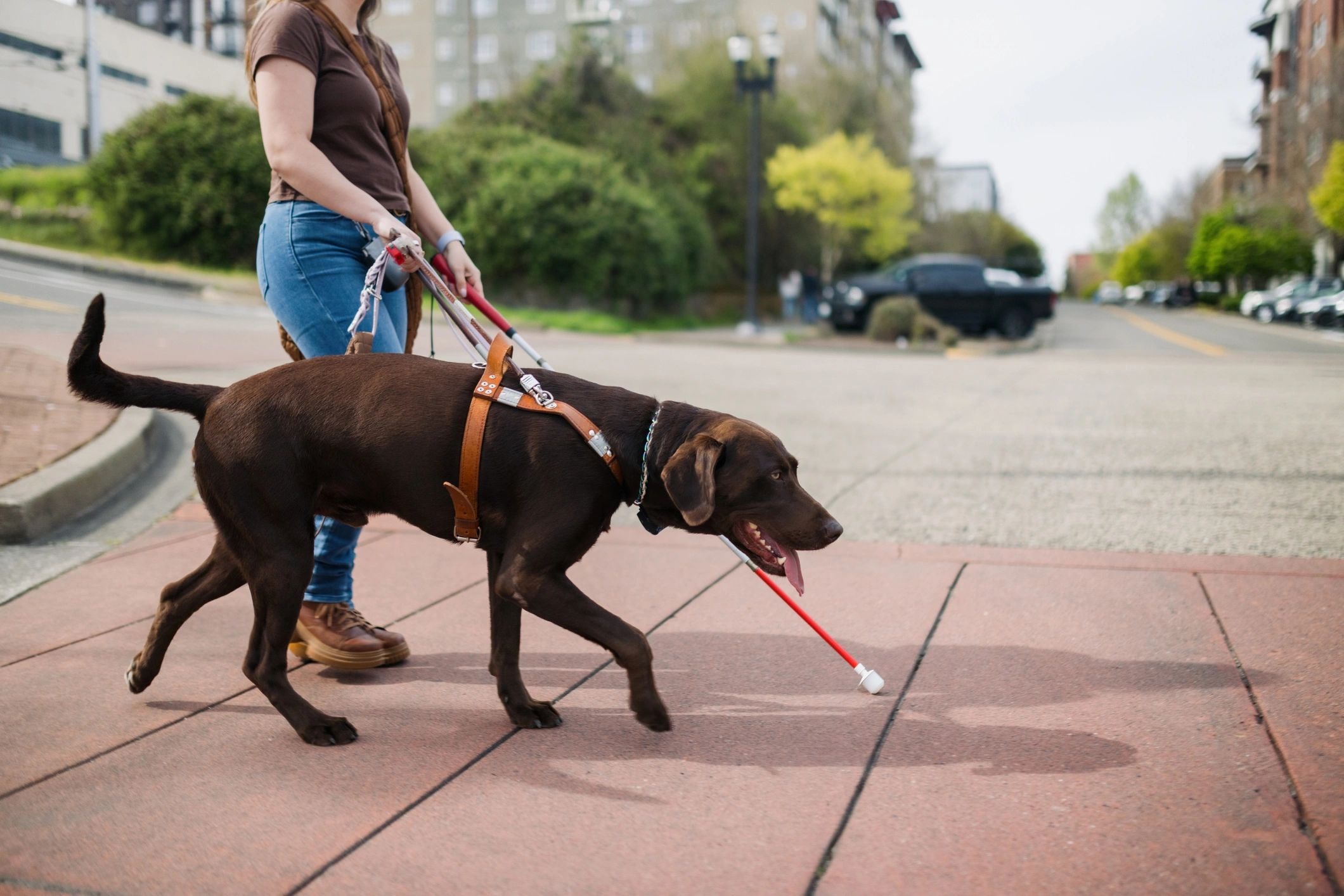


Empower your staff with comprehensive, expert-led training sessions.
Connect & Learn
Welcome to Service Dog Presentations
A volunteer initiative born from a critical need — this project exists to give businesses the exact knowledge and tools needed to protect their staff, their customers, and the legitimate service dog teams who depend on equal access. Explore the free resources below, or book a workshop and bring the training directly to your team.

Why This Matters
I started this initiative after witnessing the devastating real-world consequences of untrained, aggressive pets being misrepresented and brought into non-pet-friendly stores. When businesses lack the training to enforce proper boundaries, customers and staff are put at risk — and irreplaceable, life-saving service dogs are traumatized into early retirement.
The mission is simple: end this dangerous trend by equipping every business owner and employee with the knowledge to act confidently, legally, and compassionately. Every resource on this site is completely free.
Free Legal Resources
Dive into plain-language breakdowns of ADA law, Colorado statutes, and the two questions every business is legally allowed to ask.
Staff Empowerment
Give your team the confidence to handle service animal interactions correctly — without fear of violating the law or putting anyone at risk.
Know Your Rights
Businesses have real, enforceable rights under the ADA. Learn exactly when and how to act — and what documentation is never legally required.
Protect Your Space
Understand the grounds for lawful removal, how to document incidents, and how to create a safer environment for every customer and legitimate team.
Jump to a section

The Americans With Disabilities Act
The Americans with Disabilities Act (ADA) is a landmark federal civil rights law passed in 1990. It prohibits discrimination against individuals with disabilities in all areas of public life, including jobs, schools, transportation, and public accommodations such as retail stores, restaurants, and hotels. Under Title III of the ADA, private businesses that serve the public are legally required to provide equal access to individuals with disabilities — including allowing individuals to be accompanied by their trained service animals.
Before the ADA was signed into law by President George H.W. Bush, individuals with disabilities had no federal legal protection against being turned away from businesses, denied employment, or excluded from public spaces simply because of their disability. The ADA changed that permanently. It established that disability is not a barrier to full participation in American society — and that businesses, governments, and institutions have a legal obligation to ensure that.
The ADA is divided into five titles. Title I prohibits employment discrimination. Title II covers state and local government services. Title III — the title most relevant to retail businesses, restaurants, and service providers — requires that places of public accommodation provide full and equal enjoyment of goods, services, and facilities to individuals with disabilities. Title IV addresses telecommunications access, and Title V contains miscellaneous provisions including protections against retaliation.
For disabled individuals who rely on service animals, the ADA is not a convenience — it is a lifeline. A guide dog allows a blind person to navigate safely. A seizure alert dog can warn its handler minutes before a life-threatening episode. A psychiatric service dog can interrupt a panic attack or self-harming behavior. Without the legal protections of the ADA, these individuals could be turned away from grocery stores, pharmacies, and medical offices — denied access to the basic necessities of daily life. The ADA ensures that no business can use ignorance of the law, personal discomfort, or a general "no pets" policy as justification for excluding a disabled person and their medically necessary service animal.
Read the Full LawThe 6 Core ADA Rules for Businesses
A service dog is strictly defined as a dog individually trained to do work or perform tasks for the benefit of an individual with a disability. The task must directly relate to the handler's disability.
Service animals must be allowed in all areas of a business where the public is normally permitted — including grocery stores and restaurants — even where local health codes ban pets.
Businesses cannot charge a pet fee or require a security deposit for a service dog, even if they charge fees for standard pets.
A business cannot exclude a service animal based on breed or size. Federal law overrides any breed-specific bans or size restrictions.
A business cannot require a service dog team to sit in a separate area, use a different entrance, or be isolated from other customers. This constitutes illegal discrimination under Title III.
The handler is responsible for the care and supervision of their service animal at all times. The business is not required to provide food, water, or a relief area.
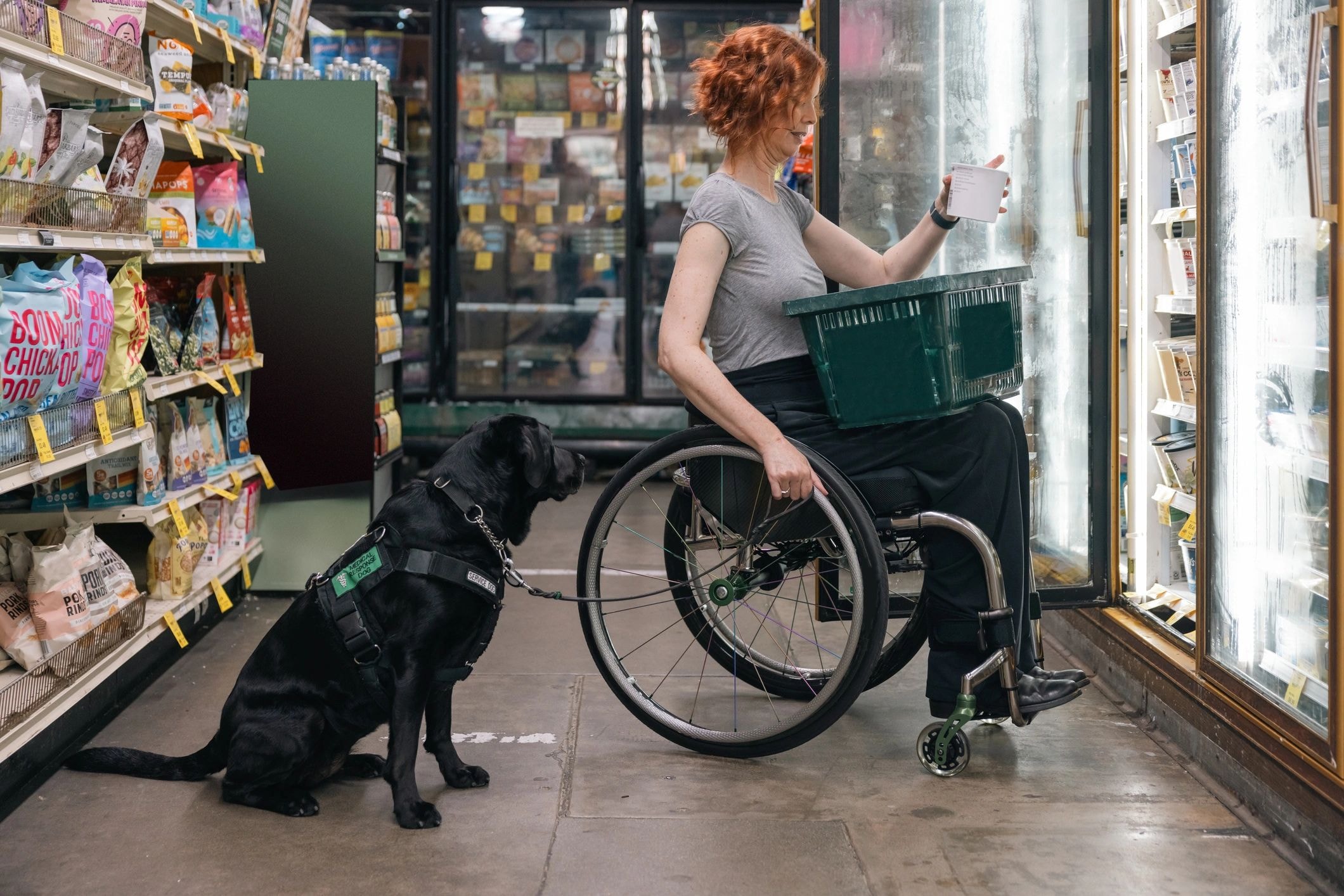
The Only Two Permitted Questions
To protect the privacy and dignity of disabled individuals, the ADA explicitly limits what staff may ask when an animal enters the building. If the need for the service animal is not obvious, staff may only ask:
"Is the dog a service animal required because of a disability?"
"What work or task has the dog been trained to perform?"
These questions may only be asked when it is genuinely not obvious that the dog is a service animal. Staff must never ask them in a confrontational tone — they exist to gather information, not to challenge the handler's legitimacy.
What Is Strictly Forbidden
The following actions are illegal under the ADA and expose your business to federal discrimination complaints and civil lawsuits.
When You Can Legally Remove a Service Animal
The ADA also protects businesses from dangerous or disruptive animals. You have the right to ask a handler to remove their dog if:
Even if a dog is legally excluded, the business must still give the human customer the opportunity to purchase goods or services without the animal present.
How the ADA Is Enforced
The ADA is enforced by the U.S. Department of Justice (DOJ). Any individual who believes they have been discriminated against under Title III may file a complaint with the DOJ or pursue a private civil lawsuit in federal court. Businesses found in violation may face:
Staff education is not optional — it is the single most effective legal shield a business can have.

What Is A Service Animal Legally?
Federal Definition — ADA Title III
What Is The Legal Definition of a Service Animal?
A service animal is defined under the Americans with Disabilities Act (ADA) as a dog individually trained to perform specific tasks that directly benefit a person with a physical, sensory, psychiatric, or intellectual disability. Other animals — including emotional support pets — do not qualify.
Under the ADA, only dogs (and occasionally miniature horses) are legally recognized as service animals. They must be actively trained to take a specific action or perform work that mitigates the handler's disability — guiding the visually impaired, alerting a person with hearing loss, retrieving medication, pulling a wheelchair, or interrupting an anxiety attack.
Because they are considered essential working tools rather than pets, service dogs are legally allowed to accompany their handlers into almost all public areas, including restaurants, grocery stores, and businesses.

Critical Distinctions
What Service Animals Are Not
Understanding the legal distinctions between service animals, emotional support animals, and therapy animals is critical for every business owner. Confusing these categories is one of the most common — and costly — compliance mistakes.

Emotional Support Animals (ESAs)
An emotional support animal provides comfort and companionship to a person with a mental health condition simply through its presence. Unlike service dogs, ESAs are not trained to perform any specific disability-related task — their therapeutic value comes from the bond itself.
For businesses: You are under no legal obligation to admit an ESA. An online "ESA letter" or vest does not grant public access rights under the ADA.
Therapy Animals
Therapy animals are trained to provide comfort and emotional support to groups of people — such as patients in hospitals, residents of nursing homes, or students during exam periods. They visit these settings with their handlers as volunteers, but they serve the facility's population, not a single disabled individual.
For businesses: A therapy animal certification does not grant public access rights. Entry to your establishment is entirely at your discretion.

Training Requirements at a Glance
How the three categories differ in training, legal standing, and public access rights
| Category | Task Training | ADA Public Access | Certification Required | Who They Serve |
|---|---|---|---|---|
| Service Dog | Mandatory — specific disability-related tasks | Yes — full federal protection | No — owner-training is legal | One disabled individual |
| Emotional Support Animal | None required | No — not covered by ADA | ESA letter from mental health provider | One person (emotional comfort) |
| Therapy Animal | Obedience & temperament only | No — by facility invitation only | Voluntary org certification (e.g. Pet Partners) | Groups of people in care settings |
Life-Saving Work
What Service Animals Are Trained to Do
Service dogs can be trained to perform hundreds of distinct, life-saving tasks tailored to both visible and invisible disabilities. Key examples include:
Mobility Assistance
Retrieving dropped items, pulling wheelchairs, opening doors, turning on light switches, and providing physical balance support for individuals with physical impairments.
Medical Alert & Response
Sensing biochemical shifts before a crisis occurs — alerting a diabetic handler to dangerous blood sugar levels or warning an epileptic handler of an oncoming seizure so they can reach safety.
Psychiatric Intervention
Utilizing Deep Pressure Therapy (DPT) to disrupt severe panic attacks, waking a handler from PTSD night terrors, creating physical boundaries in crowded spaces, and grounding a handler during sensory overload.
Sensory Guidance
Guiding blind or visually impaired individuals safely around obstacles and traffic, or alerting deaf handlers to critical sounds like smoke alarms, sirens, or doorbells.
Allergen Detection
Sniffing out microscopic traces of life-threatening allergens — such as peanuts or gluten — in food items before a handler consumes them.
Autism Support
Interrupting repetitive or self-harming behaviors, tracking a child who bolts in public, providing calming deep pressure during sensory meltdowns, and acting as a social bridge in public environments.
Legal Obligations & Best Practices
Rules and Etiquette in Public
Knowing how to interact — and how not to interact — with a working service dog team is both a legal obligation and a matter of basic respect. These rules apply to every employee, manager, and customer on your premises.
For Business Staff
For the General Public
Why This Matters Beyond Compliance
A service dog is not an accessory — it is a life-sustaining medical device in the form of a living animal. When a dog misses a blood sugar crash because a well-meaning customer distracted it, the handler can lose consciousness. When a dog fails to alert to an oncoming seizure because an employee startled it, the handler can suffer a serious injury. Proper etiquette is not just polite — it is a matter of life and safety. When a service dog team enters your establishment, protecting them from interference is not just a legal requirement — it is a moral imperative that directly impacts human survival.
Preserving Dignity & Eliminating Exclusion Trauma
Disabled individuals frequently face exhausting, humiliating access challenges just trying to complete routine tasks like buying groceries or ordering a meal. When your business trains its staff to welcome legitimate teams seamlessly — without demanding illegal paperwork or asking invasive medical questions — you protect that individual's civil rights and mental health.
Creating a safe, knowledgeable environment ensures that disabled patrons do not have to fight for their basic dignity just to do business with you.
Legal Compliance Made Easy
A service dog must maintain absolute, unbroken focus on its handler to recognize subtle medical warnings — a heart rate spike, a blood sugar crash, the early signs of a seizure. When untrained employees or customers distract a working dog, they can cause the handler to miss a critical cue, resulting in a medical emergency inside your store.
Our training simplifies complex federal service dog laws, making it easy for business owners to understand and implement ADA requirements, documentation standards, and best practices — so your team is always protected.
Service Dogs Come in Many Breeds
Any breed can be a service dog — what matters is the individual animal's training, temperament, and the tasks it performs for its handler.

Golden Retriever
Mobility & Medical Alert

Labrador Retriever
Guide & Hearing Alert

German Shepherd
Guide & Psychiatric Support

Standard Poodle
Allergen Detection & Mobility

Border Collie
Psychiatric & Seizure Alert

Doberman
Psychiatric & Medical Alert
Golden Retriever
Mobility & Medical Alert
Labrador Retriever
Guide & Hearing Alert
German Shepherd
Guide & Psychiatric Support
Standard Poodle
Allergen Detection & Mobility
Border Collie
Psychiatric & Seizure Alert
Doberman
Psychiatric & Medical Alert

The Dangers of Misrepresented Pets
Every time an untrained pet is smuggled into a business under a fake vest or fraudulent certificate, real people get hurt. Here is what that actually looks like.

Danger 1 of 4
Unpredictable Physical Hazards
When a pet owner lies about their animal's status to gain entry, they introduce an unpredictable hazard into a high-stimulus environment. Commercial spaces are packed with tight aisles, loud noises, moving carts, and erratic foot traffic. Legitimate service dogs undergo years of rigorous socialization to remain completely calm under these stressors.
Standard pets have not. When overwhelmed, they frequently experience fear, defensive aggression, or resource-guarding behavior — resulting in unpredictable lunging, snapping, and biting incidents that injure shoppers, children, and retail employees without warning.
By the Numbers
The CDC estimates 4.5 million dog bites occur in the U.S. each year. Retail and food service environments are among the highest-risk settings when untrained animals are present.

Danger 2 of 4
Attacks on Customers, Staff & Service Dogs
Documented incidents across the country show untrained pets biting employees, lunging at children, and violently attacking legitimate service dogs inside retail stores and restaurants. These are not hypothetical risks — they are recurring, real-world events with serious consequences.
A single attack on a working service dog can end years of specialized training overnight. The dog may develop fear-based reactivity that makes it impossible to work in public, forcing an immediate and permanent retirement — leaving a disabled handler without their life-saving medical partner for months or longer.
Real Cost
A professionally trained service dog costs between $20,000 and $50,000. An attack that forces retirement destroys that investment and leaves a disabled person without critical support.

Danger 3 of 4
Legal Liability & Health Code Violations
When a business passively allows a fraudulent pet inside, it absorbs the legal liability for everything that animal does. If the pet bites a customer, attacks a service dog, or contaminates a food preparation area, the business — not the pet owner — faces the lawsuit, the health department fine, and the workers' compensation claim.
Local health codes strictly prohibit animals inside food-service establishments. Allowing a pet in — even unknowingly — can trigger a failed health inspection, forced temporary closure, and significant financial penalties. The pet owner walks away. Your business pays the price.
Legal Exposure
Premises liability claims from animal-related injuries can result in settlements ranging from tens of thousands to hundreds of thousands of dollars — plus rising insurance premiums.
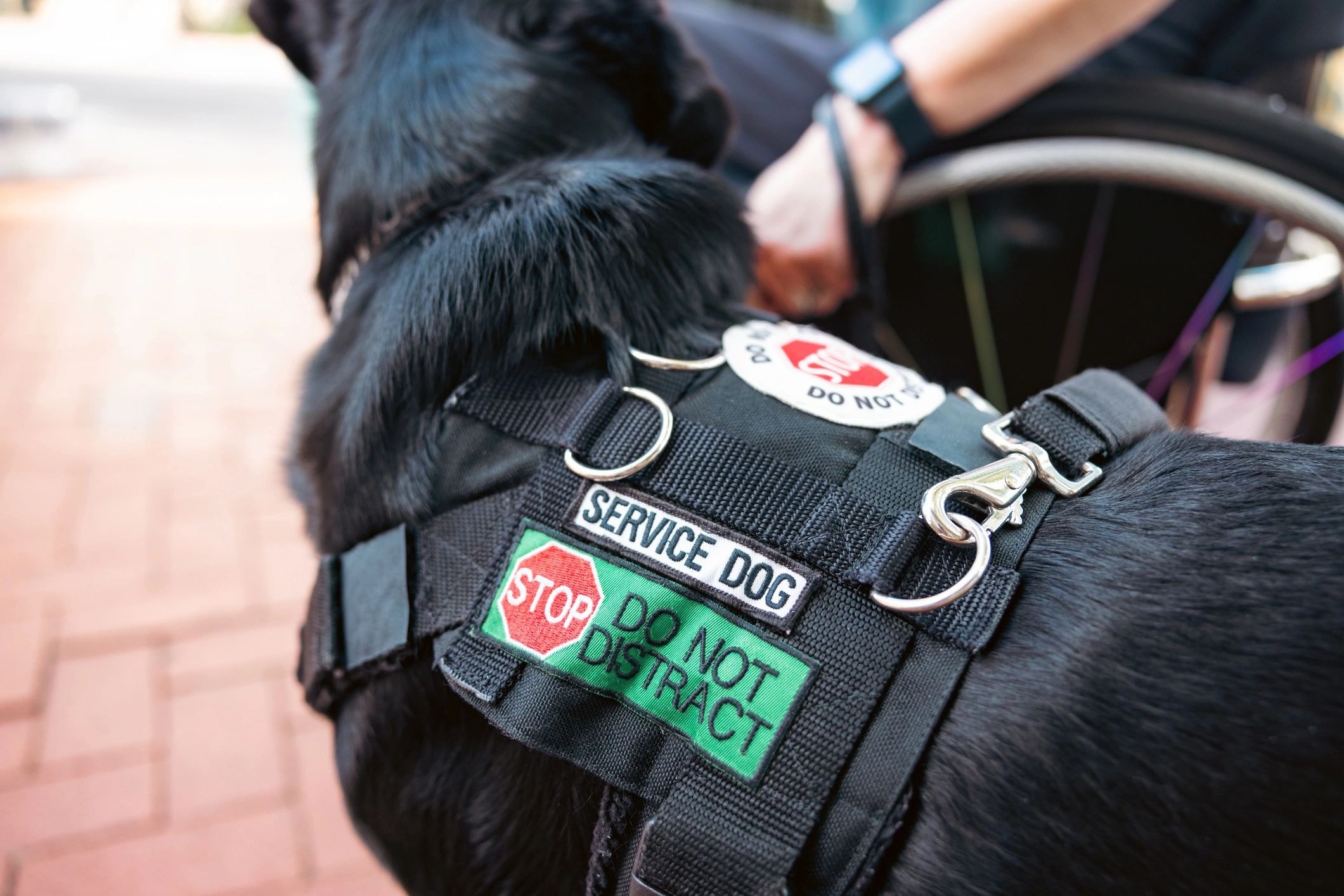
Danger 4 of 4
Toxic Bias Against Real Handlers
Every fraudulent pet that barks, urinates, or bites inside a store poisons the well for legitimate service dog teams. Staff who have been burned by fake animals develop a reflexive suspicion toward every dog that walks through the door — including the real ones.
Disabled handlers are then subjected to illegal interrogations, demands for nonexistent paperwork, and humiliating public confrontations — simply because a pet owner wanted to avoid leaving their dog in the car. The fraud of one person directly harms the civil rights of another.
Documented Cases
Real-World Incidents
These are documented examples of the harm caused when untrained pets are smuggled into businesses under fake credentials.
Walmart, Colorado
October 21, 2023
An aggressive dog brought into a Walmart in Woodland Park, Colorado brutally attacked a frontline staff member working at the customer service desk. The employee sustained serious injuries requiring emergency medical treatment when the customer's pet suddenly lunged and bit them. This severe incident highlights the immense physical dangers businesses face when they fail to enforce non-pet policies and do not train staff to intercept fraudulent animals at the threshold.
Upscale Bistro, Denver CO
April 14, 2026
A customer illegally brought an untrained pet into a Denver bistro by falsely claiming it was a trained service animal. While a server was delivering plates to an adjacent table, the stressed animal suddenly lunged and bit the server on the arm, requiring immediate medical attention and sparking cross-contamination concerns in the dining area. This incident emphasizes the physical dangers restaurant staff face when management fails to implement clear front-door screening protocols.
King Soopers, Denver CO
November 27, 2017
An untrained pet brought into a King Soopers grocery store lunged aggressively at a harnessed working service dog, directly attacking the legitimate team. The chaotic encounter left the disabled handler physically shaken and deeply traumatized. This incident illustrates the devastating consequences that arise when businesses do not proactively screen animals at the door, and how a lack of frontline training actively compromises the safety of real working teams.
Loose Caboose Restaurant, Texas
January 9, 2021
An untrained pit bull wearing a fake service vest violently bit a three-year-old child inside the Loose Caboose restaurant. The toddler sustained severe facial injuries requiring emergency surgery and extensive medical care. Following a formal administrative hearing, a justice of the peace ruled that the aggressive pet be humanely euthanized. This tragic event underscores the profound public safety risks businesses face when they fail to vet animals at the entrance.
Walmart, Palm Harbor FL
April 14, 2026
Two aggressive pets masquerading as service animals engaged in a violent dog fight inside a Walmart. While trying to separate the lunging animals, three staff members and the two pet owners sustained multiple physical injuries, resulting in emergency response teams treating victims on-site and hospitalizing one individual. Authorities later confirmed that neither animal was an actual service dog.
Outdoor Dining Area, Bay Ridge NY
July 14, 2025
An untrained pit bull suddenly lunged at a leashed, working service dog named Drexel, dragging the service animal by the neck from underneath a patio barrier while his disabled handler looked on in horror. The pet's owner refused to provide contact information and fled the scene before police arrived. This encounter underscores how fraudulent pets entering business environments create an immediate safety crisis, routinely causing working dogs to require trauma retraining or face forced, premature retirement.
Colorado State Law
Criminal Penalties for Misrepresentation
Many states have enacted criminal penalties for misrepresenting a pet as a service animal. In Colorado, passing off a pet or emotional support animal as a service animal is an explicit criminal violation under Colorado Revised Statutes Section 18-13-107.7 — enacted specifically to curb fraud, prevent health code violations, and protect legitimate service dog teams.
Read Colorado's Fake Service Animal Law →
Fraudulent Online Paperwork
Why No Federal Registry Exists
The Government Intentionally Created No Registry
The United States government, under the Department of Justice (DOJ) and the Americans with Disabilities Act (ADA), deliberately chose not to create a federal registry, certification system, or ID card program for service animals. This was not an oversight — it was a deliberate policy decision made for three critical reasons:
Socioeconomic Accessibility
Mandating a federal testing and licensing system would create a severe financial and logistical barrier for disabled individuals. Many cannot afford the high costs of official training programs, traveling to testing sites, or paying licensing fees — a registry would effectively price disabled people out of their own civil rights.
The Right to Owner-Train
The ADA explicitly grants disabled individuals the legal right to train their own service dogs. They are not required to use an expensive, certified organization. A federal registry would undermine this right by implying that only "officially trained" dogs qualify.
Protection of Privacy
Requiring a handler to carry a government-issued ID card or medical documentation to enter a grocery store or restaurant forces them to constantly prove their disability — violating their basic right to privacy and dignity in public life.
The Downstream Harm
The Paperwork Expectation
When pet owners buy fake certificates online to bypass store rules, it directly harms legitimate service dog teams in two destructive ways:
It Creates a "Paperwork Expectation"
When uneducated retail employees constantly see fraudulent pet owners handing over laminated badges or plastic ID cards, they mistakenly believe that service dogs must have paperwork. When a real, legitimate service dog team walks in without an ID card — because the law doesn't require one — staff often illegally deny them entry, violating the handler's civil rights.
It Fosters Immediate Suspicion
Fraudulent pets often misbehave inside stores by barking, pulling, or urinating. Frustrated employees begin to associate all dogs with bad behavior, causing them to treat real, perfectly behaved service dog teams with immediate hostility, skepticism, and illegal access challenges. The fraud of one person poisons the experience for every legitimate handler who follows.
How to Spot a Fake
Key Features of Fake Paperwork
Because no official paperwork exists, retail employees can easily spot a fake by looking for these specific red flags. Note: any document presented by a customer to prove their dog is a service animal is technically fraudulent in a public access setting.
All online websites selling "Official ADA Registration Certificates," "ID Badges," or "ESA Housing Letters" are unregulated private companies operating legal scams. They sell worthless merchandise that carries zero legal weight under federal law.
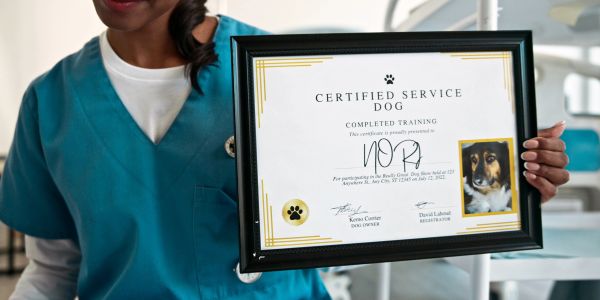
Visual Reference
What Fake Paperwork Looks Like
These are the four most common items fraudulent pet owners purchase online and present to staff. None of them carry any legal weight under the ADA — but they are designed to look convincing.
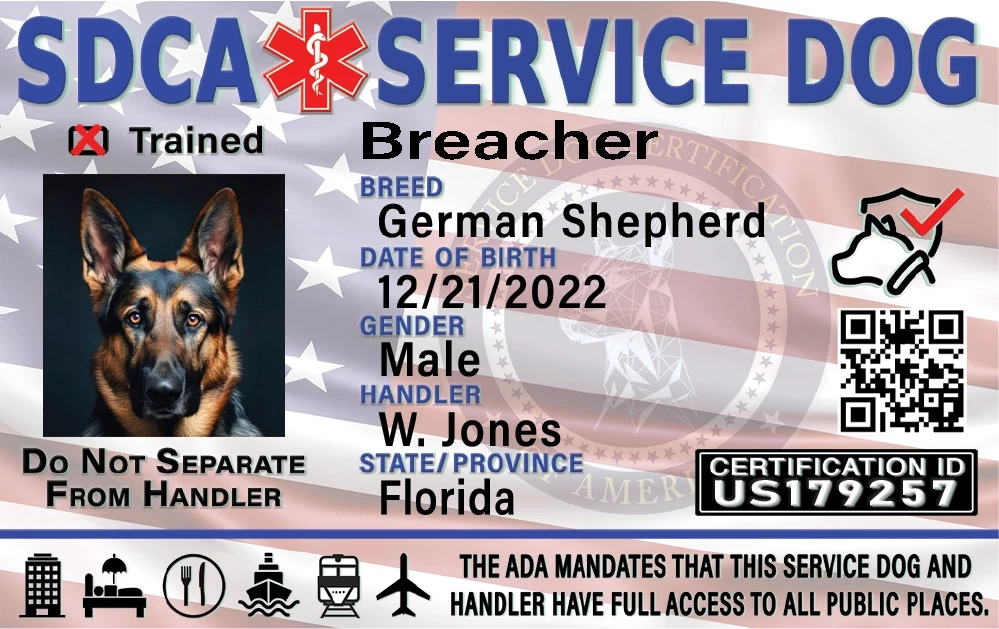
Service Animal ID Card
Laminated photo ID cards sold online for $15–$40. They mimic official government credentials but have no legal standing whatsoever.
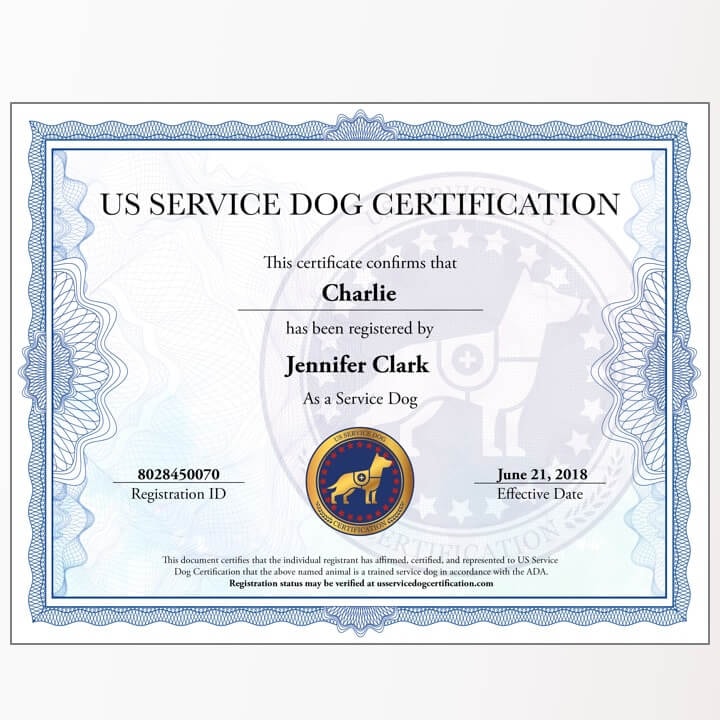
Registration Certificate
Official-looking certificates with gold seals and registry numbers. No federal or state registry for service animals exists — these are purely decorative.
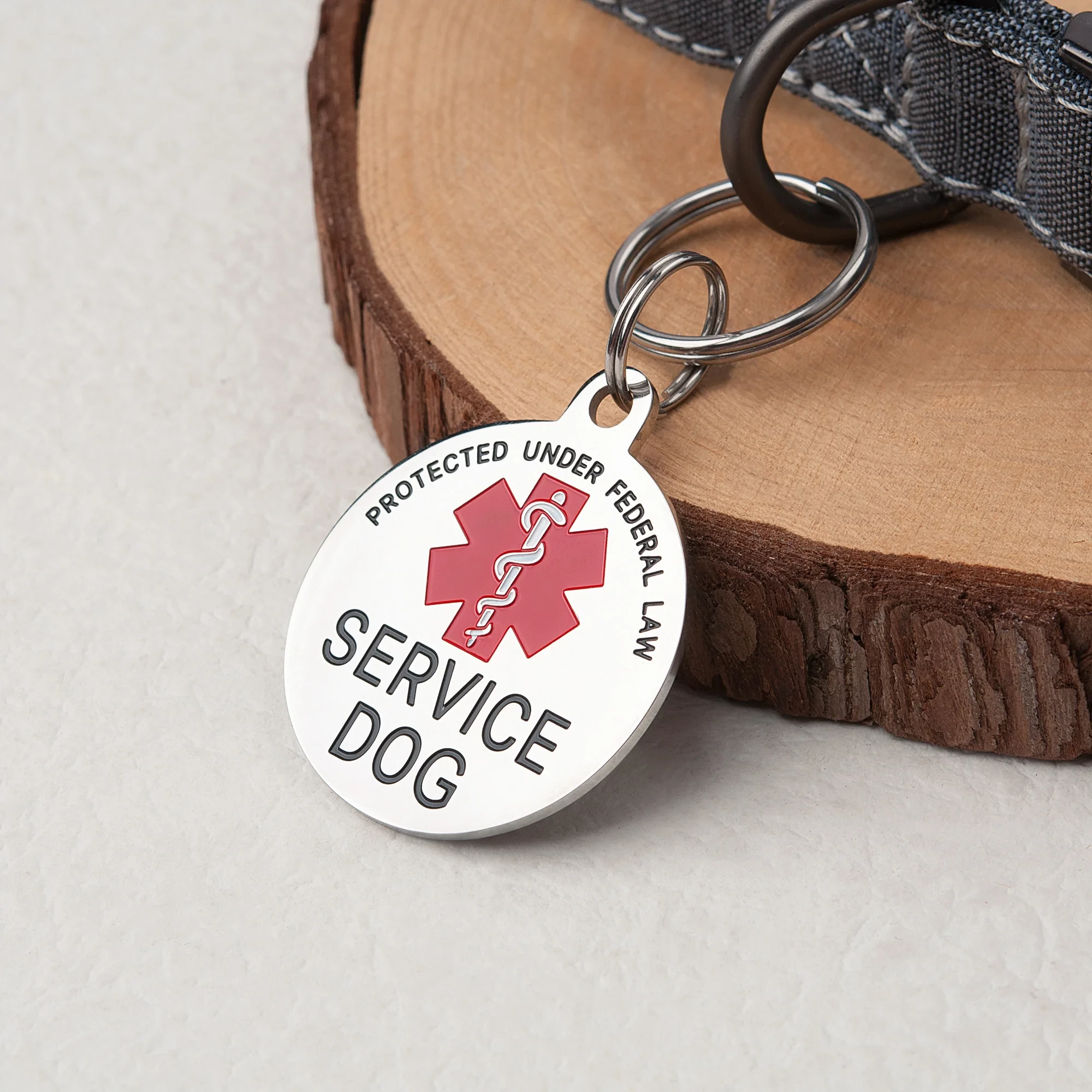
Service Dog Tag
Metal collar tags engraved with "Service Animal" or "Do Not Pet." Any pet owner can purchase these for a few dollars — they prove nothing.

Doctor's Letter
Letters on official-looking letterhead prescribing an 'emotional support animal.' ESA letters do not grant ADA public access rights in retail or food-service settings.
If a customer presents any of the above, your staff is not legally required to accept it as proof. The only two questions that matter are the ones permitted by the ADA.
Staff Training Protocol
What to Do If Someone Presents a Document
If a customer attempts to hand your employee a certificate, badge, or letter to gain entry, staff should remain polite, professional, and execute this exact four-step protocol.
Pivot Away from the Paperwork Immediately
Do not spend time reading, analyzing, or validating the document. Acknowledge it briefly, but make it clear that your store follows federal law rather than online paperwork. Engaging with the document legitimizes it in the customer's mind.
Suggested Script
""Thank you, but under federal ADA law, our store does not require or review registration papers, certificates, or ID badges. We focus entirely on the law's standard questions.""
Deploy the Two Legal ADA Questions
Immediately shift the focus to the only two questions your business is legally permitted to ask. This forces the handler to verbally confirm the dog's legitimacy rather than hiding behind a fake badge.
Suggested Script
""Is the dog a service animal required because of a disability?" and "What work or task has the dog been trained to perform?""
Evaluate the Answers and Behavior
If they answer correctly (e.g., "She alerts me to medical spikes" or "He picks up dropped items") and the dog is behaving calmly, allow entry. If they name an invalid category ("It's my emotional support animal"), you can firmly and legally deny entry. If they refuse to answer, deny entry.
Judge by Ongoing Behavior, Not the Paperwork
Remind your staff that even if a customer answers the two questions perfectly and walks inside, behavior overrides everything. If the dog begins barking, lunging, snapping, or sniffing merchandise, your store retains the absolute legal right to order the animal to leave immediately.

WHAT ARE YOUR RIGHTS AS A BUSINESS?
What This Section Covers
Understanding your rights as a business is only the foundation. The sections that follow give you the complete operational toolkit every non-pet-friendly business needs to enforce those rights with confidence, consistency, and full legal compliance.
Legally Remove Disruptive Animals walks you through the exact ADA-compliant process for removing a dog — even a legitimate service animal — when its behavior becomes a direct threat to safety or operations. Most business owners don't realize they have this right, and fewer still know how to exercise it without exposing themselves to a discrimination claim.
Empower and Protect Your Employees addresses the frontline reality: your staff are the first point of contact, and without proper training they are left to make high-stakes legal decisions in real time with no guidance. This section equips them with the language, the protocol, and the confidence to handle every animal-related situation calmly and correctly.
Welcoming Legitimate Service Dog Teams closes the loop by ensuring your business is a safe, respectful, and legally compliant environment for the disabled handlers and working dogs who depend on public access every day. A business that knows how to exclude fraudulent pets is equally a business that knows how to welcome real ones — and that distinction is what separates a well-trained team from a liability waiting to happen.
Under the Americans with Disabilities Act (ADA), your business must allow service animals to accompany disabled individuals anywhere the public is normally allowed to go. However, you maintain the right to verify the animal's status and remove it if it misbehaves or poses a safety threat.
Knowing service dog laws and strictly enforcing non-pet policies protects your business by drawing a clear, legally bulletproof line between protected civil rights and unregulated pet ownership. Here is exactly how this knowledge and enforcement prevent legal and financial penalties.
It Eliminates ADA Civil Rights Lawsuits
The Risk:
Under the Americans with Disabilities Act (ADA), denying entry to a legitimate service dog team is a federal civil rights violation. It can trigger Department of Justice (DOJ) investigations, federal fines up to $75,000 for a first offense, and costly private lawsuits.
The Protection:
Training teaches staff the only two questions they are legally allowed to ask: (1) Is the dog required because of a disability? and (2) What task has it been trained to perform? Asking anything else (like demanding medical history or a task demonstration) is illegal. Knowing the script prevents staff from committing an accidental civil rights violation.
It Shields You from Health Department Fines
The Risk:
If you run a business that sells or serves food (grocery stores, cafes, restaurants), local health codes strictly prohibit pets inside. Allowing pets inside can result in failed inspections, heavy financial penalties, or forced closure.
The Protection:
The ADA grants an exception to trained service dogs only, not pets or emotional support animals (ESAs). By strictly enforcing a non-pet policy, you demonstrate to health inspectors that you are actively protecting food safety zones, while using your ADA knowledge to accommodate legal exceptions.
It Shifts Liability When Removing Disruptive Dogs
The Risk:
Business owners often fear that kicking out a misbehaving dog will result in a discrimination lawsuit. They let poorly behaved animals stay, which ruins the customer experience or damages inventory.
The Protection:
The ADA explicitly states that a business can legally remove any dog—even a legitimate service dog—if it is out of control (barking, growling, lunging) or not housebroken. Knowing this law allows you to confidently eject disruptive animals based entirely on their behavior, keeping your business safe while remaining 100% legally compliant.
It Lowers Workers' Comp and Premise Liability Claims
The Risk:
Untrained pets in a store pose a massive physical liability. If a customer's pet bites an employee, attacks another shopper, or fights with a legitimate service dog, your business faces massive personal injury lawsuits, rising insurance premiums, and workers' compensation claims.
The Protection:
Uniformly enforcing your non-pet policy ensures that the only animals entering your building are highly trained, stable, and under complete control. This drastically reduces the likelihood of animal-related injuries on your property.
Documented Cases
Real Businesses. Real Consequences.
These are documented incidents where businesses that failed to enforce non-pet policies faced staff injuries, health department action, and significant financial and legal consequences.
Chipotle Mexican Grill, New York City NY
February 2020
Health Department FineA Chipotle location in Manhattan was cited by the New York City Department of Health after a customer brought an untrained dog into the restaurant and the animal was observed near the food preparation area. The incident triggered a formal health inspection, resulted in a failing grade posted publicly on the restaurant's window, and required the franchise to undergo a full remediation review before the grade could be appealed. The public posting of a failing health score caused an immediate and measurable drop in foot traffic during the weeks that followed.
Grocery Store, Portland OR
March 2022
Staff Injury & Workers' Comp ClaimA customer brought a medium-sized dog into a Portland grocery store, claiming it was a service animal. While a stock associate was restocking a low shelf in the pet food aisle, the dog lunged without warning and bit the employee on the forearm, breaking the skin and requiring urgent care treatment. The store faced a workers' compensation claim, a mandatory OSHA incident report, and an internal review of its animal admission policy. The pet owner was uninsured, leaving the business to absorb the full cost of the claim.
Upscale Restaurant, Chicago IL
August 2023
Premises Liability LawsuitA diner brought a small dog into a Chicago restaurant, seating it on the booth bench beside them. When a server leaned in to clear plates, the dog bit the server's hand, severing a tendon and requiring surgical repair. The server filed a premises liability lawsuit against the restaurant, arguing that management had failed to enforce its own no-pets policy and had therefore created an unsafe working environment. The case settled out of court for an undisclosed amount, and the restaurant's general liability insurance premium increased significantly at its next renewal.
Café Chain Location, Denver CO
November 2024
Health Code Violation & Forced ClosureA Denver café was subjected to an unannounced health inspection after a customer complaint reported a pet inside the establishment. The inspector observed dog hair on a food preparation surface and issued an immediate critical violation under Colorado food safety code, which prohibits live animals in areas where food is prepared or served. The location was ordered to close for deep cleaning and sanitization, losing an estimated two days of revenue. The franchise owner was required to submit a corrective action plan and attend a mandatory food safety compliance review before reopening.

Legally Remove Disruptive Animals
Knowing service dog laws and strictly enforcing a non-pet policy creates a legal barrier that keeps aggressive pets out. It changes your staff from passive observers into active, legally protected gatekeepers. Here is exactly how this knowledge and policy enforcement prevent aggressive pets from entering your store:
It Shuts Down the "Emotional Support Animal" (ESA) Loophole
The Reality:
Many aggressive pets are brought into stores under the guise of being an "Emotional Support Animal."
The Law:
Under the ADA, Emotional Support Animals are not service animals. They do not have public access rights.
The Prevention:
When staff know the law, they can confidently stop anyone attempting to bring in an ESA. Because ESAs do not require task-training, they are often entirely untrained and highly prone to resource-guarding, barking, or biting in crowded environments.
The Two Legal Questions Force Fraudulent Owners to Pivot
The Reality:
Pet owners with aggressive dogs rarely have a rehearsed, legally compliant answer when challenged.
The Law:
You are legally permitted to ask: (1) Is the dog required because of a disability? and (2) What work or task has the dog been trained to perform?
The Prevention:
When trained staff ask these questions at the door, it immediately signals to a pet owner that your business understands the law. Rather than lying, most pet owners with poorly behaved dogs will choose to leave the establishment.
It Completely Invalidates Fake Online Paperwork
The Reality:
Owners of aggressive dogs frequently buy fake vests, badges, and "registration certificates" online to force businesses into letting them inside.
The Law:
The DOJ does not recognize any online registries, certifications, or IDs. A vest carries zero legal weight.
The Prevention:
When staff know that paperwork is meaningless, they ignore the flashing badges and fraudulent certificates. They judge the animal solely by its entry behavior and the handler's answers, stripping aggressive pet owners of the fake credentials they rely on to bypass store rules.
It Gives Staff Immediate Authority to Eject Warning Signs
The Reality:
An aggressive dog often starts with low-level aggression, like a low growl or a sharp bark at a passing child, before escalating to a full attack.
The Law:
The ADA explicitly states that if a dog is out of control and the handler does not take immediate, effective action to correct it, the business can legally order the dog to leave.
The Prevention:
Knowing this law removes employee hesitation. Staff do not have to nervously tolerate a growling or lunging dog out of fear of a discrimination lawsuit. They can immediately invoke the law to eject the animal based entirely on its dangerous behavior, stopping an attack before it happens.
Documented Cases
When Businesses Failed to Remove — And Paid the Price
These documented incidents show what happens when staff lack the training, authority, or confidence to remove a disruptive or dangerous animal before the situation escalates.
Target, Temecula CA
September 2019
Staff Bitten — Removal DelayedA customer brought a large dog into a Temecula Target store, claiming it was a service animal. Staff observed the dog growling at passing shoppers for several minutes but hesitated to act out of fear of a discrimination complaint. Before management could intervene, the dog lunged at a team member who was stocking a nearby shelf, biting the employee on the leg. The incident required emergency medical treatment and triggered an internal review of the store's animal policy. Staff later confirmed they had noticed warning signs early but did not feel empowered to act on them.
Whole Foods Market, Austin TX
June 2021
Disruptive Animal — Removal RefusedA shopper brought an untrained dog into a Whole Foods location in Austin, where the animal barked continuously and lunged at other customers near the produce section. Multiple employees approached the owner and asked her to leave, but she refused, citing her dog's "service animal status" and threatening to file an ADA complaint. Without clear training on the law's removal provisions, staff backed down and allowed the animal to remain. The incident was filmed by another shopper and posted online, generating significant negative press for the location and prompting corporate to issue updated animal policy guidance to all stores.
Applebee's Restaurant, Portage MI
March 2023
Child Bitten — No Removal ProtocolA family dining at an Applebee's in Portage, Michigan brought a dog they claimed was a service animal. The animal displayed agitated behavior throughout the meal — pacing, whining, and snapping at a server who approached the table. When a child at an adjacent table reached toward the dog, it bit the child on the hand, requiring urgent care treatment. The restaurant had no documented animal removal protocol in place, and staff had not been trained on the ADA's behavioral removal provisions. The family of the injured child filed a premises liability claim against the franchise.
Home Depot, Sacramento CA
November 2022
Service Dog Attacked — Staff Did Not InterveneA legitimate service dog handler was shopping at a Sacramento Home Depot when another customer's pet — wearing a fake service vest — began aggressively circling and snapping at the working dog. Store employees witnessed the confrontation but did not intervene, unsure whether they were permitted to ask either party to leave. The pet eventually attacked the service dog, causing injuries that required veterinary treatment and a two-week recovery period during which the handler was without her medical alert partner. The handler filed a formal ADA complaint, arguing that the store's failure to act constituted a failure to protect her right to equal access.

Empower and Protect Frontline Employees
Knowing service dog laws and strictly enforcing a non-pet policy protects your employees and customers by creating a controlled, predictable, and safe environment. Here is exactly how this knowledge and policy enforcement prevent physical injury, emotional distress, and operational disruption.
It Minimizes the Risk of Dog Bites and Attacks
The Danger:
Untrained pets lack the rigorous socialization required for crowded, high-stimulus retail and commercial spaces. When stressed by shopping carts, loud noises, or crowds, pets are highly prone to fear-biting, lunging, or snapping.
The Protection:
Uniformly enforcing your non-pet policy bars these unpredictable animals from your store. It ensures that the only dogs walking your aisles are highly trained service animals that have been conditioned to completely ignore environmental stressors, protecting your shoppers and frontline staff from traumatic physical attacks.
It Protects Legitimate Service Dog Teams from Interference
The Danger:
An untrained pet or aggressive "fake" service dog inside a store will often bark at, lunge at, or attack a legitimate service dog. If a working service dog is injured or severely distracted by an aggressive pet, it can no longer safely guide or perform life-saving tasks (like seizure alerts) for its disabled handler.
The Protection:
By keeping pets out, you ensure your business remains a safe haven for disabled individuals who rely on their animals to survive. It eliminates the risk of an aggressive pet ruining years of expensive, specialized service dog training in a single, violent interaction.
It Shields Staff from High-Stress Confrontations
The Danger:
Frontline employees face immense anxiety when forced to handle encounters with animals without clear guidance. They worry about getting sued for discrimination if they speak up, or getting reprimanded by management if a pet causes a disruption.
The Protection:
Clear policy and ADA training eliminate the guesswork. Staff are empowered with a definitive, legally bulletproof script (the two allowed ADA questions) and a clear mandate from management. This clarity transforms an awkward, stressful confrontation into a routine, professional policy check, lowering employee workplace stress.
It Maintains Food Safety and Allergen Control
The Danger:
Untrained pets scratch, shake off dander, sniff open food items, or sit directly in shopping carts where others place their groceries. This introduces severe cross-contamination risks, violates local health codes, and triggers severe allergic reactions or asthma attacks in other customers and staff members.
The Protection:
While the ADA requires you to permit service dogs, it strictly forbids animals from sitting in shopping carts or being fed from restaurant tables. Knowing these specific legal boundaries allows your staff to enforce strict hygiene standards, protecting customers with severe animal allergies and ensuring your business stays compliant with local health department regulations.
Documented Cases
When Untrained Staff Were Left Without a Protocol
These documented incidents illustrate what happens when frontline employees are placed in high-stakes animal situations without the training, language, or authority to respond correctly.
Walmart Supercenter, Bowling Green KY
October 2020
Employee Bitten — No Policy in PlaceA customer entered a Walmart in Bowling Green with a dog wearing a service vest purchased online. A cashier noticed the dog growling at customers in the checkout line but had no training on how to address the situation and feared being accused of discrimination if she spoke up. When she reached across the conveyor belt to scan an item, the dog bit her on the wrist, breaking the skin and requiring medical treatment. A post-incident review found that no animal policy training had ever been provided to frontline staff, and no escalation protocol existed for employees to follow when an animal displayed threatening behavior.
Panera Bread, Columbus OH
May 2022
Allergic Reaction — Staff Lacked Authority to ActA customer brought a small dog into a Panera Bread location in Columbus, claiming it was an emotional support animal. A staff member with a documented dog allergy was assigned to serve the table and within minutes began experiencing a severe allergic reaction — watering eyes, hives, and difficulty breathing — requiring her to leave the floor and take emergency antihistamines. Management had not trained staff on the distinction between ESAs and service animals, so no one felt confident enough to deny the customer entry. The employee later filed a workplace safety complaint, and the franchise was required to develop a formal animal accommodation policy for staff with documented allergies.
TJ Maxx, Scottsdale AZ
January 2023
Staff Confrontation Escalated — No Script ProvidedA TJ Maxx associate in Scottsdale approached a customer whose dog was urinating on a display rack and asked the customer to leave. The customer became verbally aggressive, accused the employee of violating the ADA, and demanded to speak with a manager. The associate, who had no training on the two permitted ADA questions or the law's behavioral removal provisions, became flustered and backed down. The customer remained in the store for another forty minutes while the dog continued to cause disruption. The associate later reported the incident as one of the most stressful of her employment, and the store subsequently enrolled its management team in a service animal policy training program.
Kroger Grocery, Nashville TN
August 2024
Health Violation — Staff Did Not InterveneA shopper brought a dog into a Nashville Kroger and placed the animal directly inside a shopping cart in the produce section. Multiple employees observed the situation but none intervened, uncertain whether the dog's presence in the cart was protected under the ADA. A health inspector conducting a routine visit witnessed the animal in the cart and issued an immediate critical violation, noting that the ADA explicitly prohibits service animals from being placed in shopping carts regardless of disability status. The store received a formal citation, was required to retrain all floor staff on ADA animal provisions, and the incident was logged in the store's health compliance record.
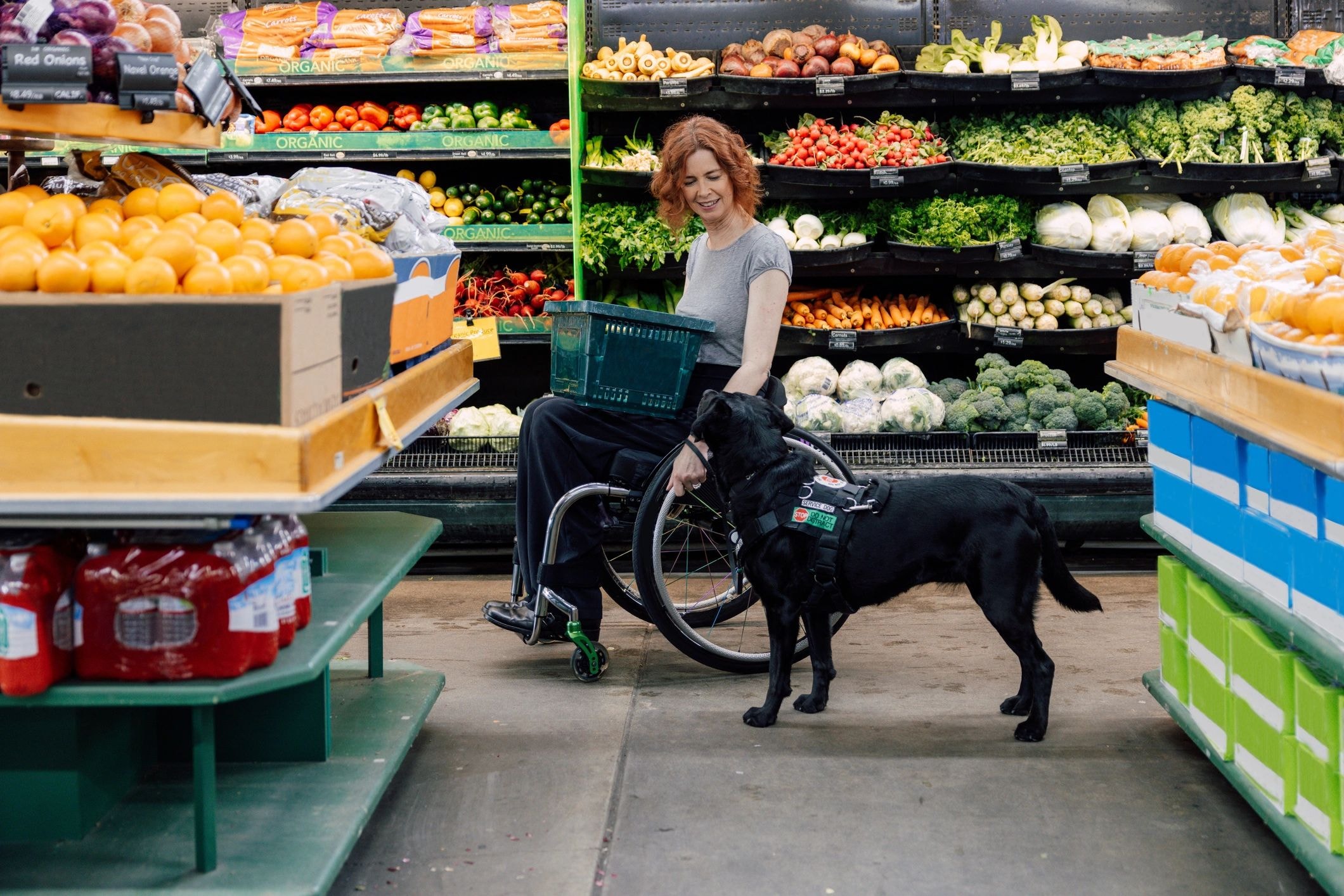
Welcome Legitimate Service Dog Teams
Knowing service dog laws and strictly enforcing a non-pet policy is the single best way to protect and welcome legitimate service dog teams. True accommodation requires keeping untrained pets out so that working dogs can do their jobs safely. Here is exactly how knowing the law and enforcing your policy protects and welcomes real service dog handlers.
It Guarantees Physical Safety for the Working Dog
The Threat:
Legitimate service dogs undergo years of intense training costing upwards of $20,000 to $50,000. An encounter with an untrained, aggressive pet inside a store can result in a physical attack. A single traumatic attack can cause a service dog to develop fear-based behavior, forcing its early, devastating retirement.
The Welcome:
When your business strictly bars pets, you create a safe sanctuary. A disabled handler can walk through your doors confidently, knowing their life-saving guide, medical alert, or mobility dog will not be cornered or attacked while working.
It Eliminates Dangerous Operational Distractions
The Threat:
Working dogs must maintain absolute, unbroken focus on their handlers to detect oncoming seizures, monitor glucose crashes, or navigate architectural barriers. Pets that bark, whine, or lunge at a service dog break that focus, which puts the handler's health and life in immediate danger.
The Welcome:
Enforcing a strict non-pet policy ensures that the environment remains quiet and free of animal distractions. This allows the service dog to do its job perfectly, ensuring the handler stays safe and stable while shopping or dining in your establishment.
It Stops the "Fake Service Dog" Stigma
The Threat:
When businesses passively allow poorly behaved pets wearing fake Amazon vests to bark, snap, or urinate in stores, it creates a toxic bias. Frustrated staff and shoppers begin to view all dogs with suspicion, leading to resentment and immediate skepticism toward the next team that walks in.
The Welcome:
By actively filtering out fraudulent pets using the two legal ADA questions, your staff protects the reputation of real working dogs. When your team sees a dog behaving perfectly, they recognize it as a legitimate medical accommodation, fostering an atmosphere of deep respect rather than immediate suspicion.
It Prevents Illegal Access Challenges
The Threat:
Untrained staff often harass legitimate service dog teams by demanding nonexistent "government registration papers," asking illegal questions about the person's private medical diagnosis, or forcing them to leave because the dog doesn't have a vest. This is humiliating, stressful, and highly illegal.
The Welcome:
Education ensures that your staff knows exactly what to do. A knowledgeable employee welcomes the team warmly, asks only the two legally permitted questions if necessary, and moves them seamlessly into your store. The handler is spared the trauma of having to fight for their basic civil rights just to buy groceries or have a meal.
Documented Cases
When Legitimate Teams Were Failed by Businesses
These documented incidents show the real cost of failing to properly welcome legitimate service dog teams — from federal civil rights complaints to viral public backlash and costly legal settlements.
Uber Eats Driver Incident, Multiple U.S. Cities
2019–2022
Federal ADA Complaints — $1.1M SettlementThe U.S. Department of Justice investigated Uber after hundreds of blind and visually impaired service dog handlers reported being denied rides by Uber Eats and Uber drivers who refused to transport their guide dogs. Drivers claimed allergies or personal discomfort as justification. The DOJ found that Uber had failed to train its driver network on ADA public accommodation obligations and had no enforcement mechanism to protect handlers. Uber settled with the DOJ for $1.1 million in 2021, was required to implement a mandatory service animal policy, and had to create a dedicated reporting system for access denials.
Trader Joe's, San Luis Obispo CA
March 2021
ADA Lawsuit — Illegal Access ChallengeA legally blind customer with a trained guide dog was stopped at the entrance of a Trader Joe's location by an employee who demanded to see "official certification papers" before allowing the dog inside. When the handler explained that no such paperwork exists under federal law, the employee refused entry and called a manager, who upheld the denial. The handler filed a formal ADA complaint and subsequently a civil lawsuit. The case drew significant media attention and became a widely cited example of how employee ignorance of the two-question rule directly translates into a federal civil rights violation and reputational damage for the business.
Delta Air Lines, Atlanta GA
January 2020
Service Dog Attacked — Carrier LiabilityA passenger traveling with a trained psychiatric service dog was seated next to another traveler whose pet — wearing a purchased service vest — became agitated during boarding and attacked the working dog, causing lacerations requiring veterinary treatment. Gate staff had allowed both animals to board without applying the DOT's two-question verification process. The handler filed a complaint with the Department of Transportation, arguing that Delta's failure to screen animals at the gate had directly endangered her medical accommodation. The incident contributed to the DOT's 2021 rule change tightening the definition of service animals on commercial flights.
Costco Wholesale, Mooresville NC
November 2023
Viral Incident — Reputational DamageA Costco member who is deaf and uses a trained hearing alert dog was stopped by a floor employee who insisted the dog needed a vest and ID badge to enter the warehouse. When the handler explained the ADA's two-question standard, the employee became dismissive and called security. The confrontation was recorded by a bystander and posted to social media, where it accumulated over two million views within 48 hours. The clip generated widespread criticism of Costco's staff training practices and prompted the company to issue a public statement reaffirming its ADA compliance policy and announcing a mandatory refresher training for all warehouse floor staff.

The Workshop Breakdown
Our complete interactive workshop takes exactly 30 minutes.
Welcome & Introduction
(3 Minutes)The 10-Minute Video
(10 Minutes)Visual Fraud Guide & Toolkit Review
(7 Minutes)Interactive Q&A
(10 Minutes)Empowering Every Business Owner
At Service Dog Presentations, we are dedicated to empowering business owners with the knowledge needed to support service dog teams legally and effectively. Our workshops are tailored to address the unique needs of your industry, ensuring a safe environment for all customers and staff.
Education extends to pet-friendly businesses too.
ADA compliance is not exclusive to businesses with strict no-pet policies. Establishments that welcome pets — outdoor patios, pet supply stores, boutiques, and dog-friendly retail — carry an equal responsibility to understand the law and protect their customers.
Every business, regardless of its pet policy, must be able to distinguish between a trained service animal and an untrained pet, know when and how to intervene if an animal becomes disruptive, and ensure that legitimate service dog teams are never harassed, questioned illegally, or turned away.
A pet-friendly environment that lacks ADA training is just as vulnerable to liability, injury, and discrimination claims as one that enforces a strict no-pet policy without proper staff education. Every business should be educated. Every business should be compliant.
Included — 100% Free
What Your Store Receives
Every business that completes our workshop walks away with two powerful tools to keep their team confident and compliant — at no cost.

Certificate of Completion
Each business receives a personalized Certificate of Completion, signed by our founder Amanda Hughes, recognizing your store's commitment to ADA compliance and frontline staff education.
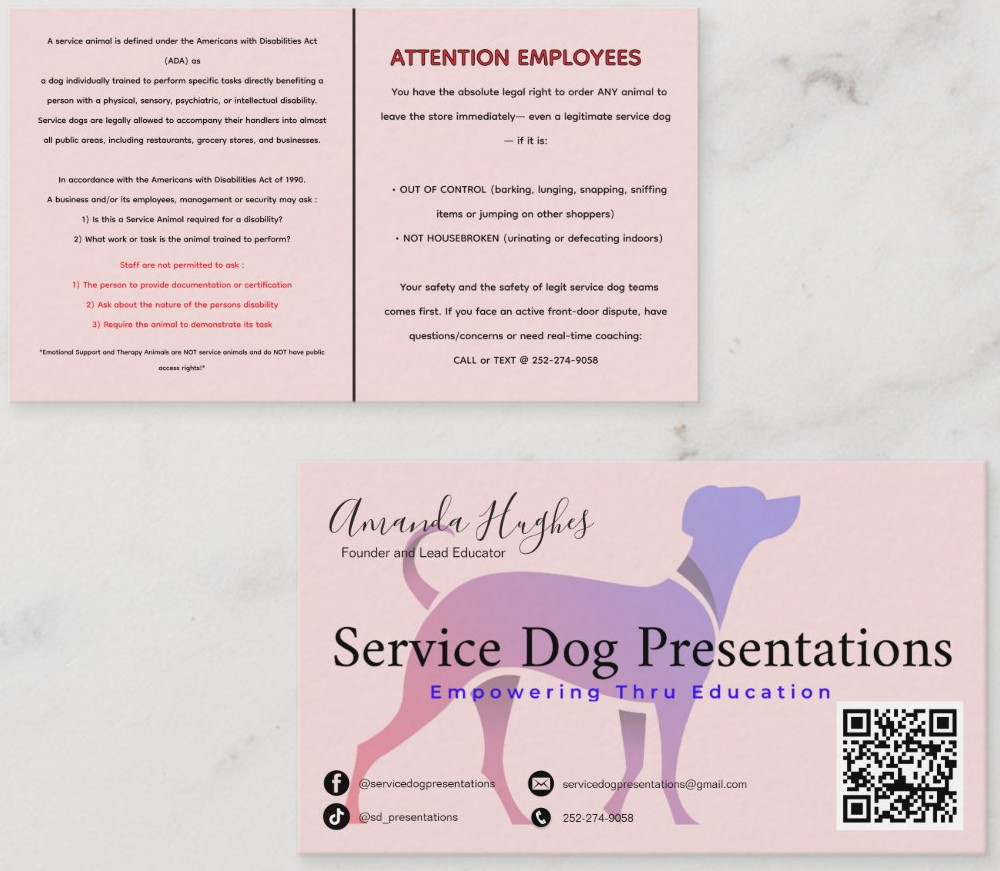
Free Custom ADA Law Cards
Wallet-sized physical law cards brought directly to your store — one for every employee. Each card outlines the two legal questions staff may ask, the grounds for removal, and a direct contact number for real-time coaching during active front-door situations.

Book Your Presentation
We're here to support your business, your staff, and your community. Whether you're interested in our free weekend workshops or need custom training for a large retail team — reach out and we'll make it happen.
Availability
How to Prepare Your Space
To ensure a seamless experience for your personnel, please verify that your training space has a screen or TV with functional audio setup to broadcast the video masterclass. Additionally, please ensure the presentation floor area is clear, as my part-time service dog, Clover, may accompany me to demonstrate professional working behavior.
What Happens Next
Our team will arrive approximately 10 to 15 minutes prior to your scheduled time to set up the technical elements and organize the physical fraud guide props. Upon the successful completion of the workshop, your business will be awarded an official Certificate of Completion to document your proactive step toward federal and state compliance.

Meet The Team Behind the Project
We live in an increasingly dog-friendly world — and that is a beautiful thing. But as more businesses open their doors to animals, the line between a trained service dog and a beloved family pet has become dangerously blurred. Fake online certifications, misrepresented emotional support animals, and well-meaning but uninformed pet owners have created a public safety crisis that falls squarely on the shoulders of frontline staff who were never given the tools to respond.
This project exists because of that gap. It was built by a handler who lived the consequences firsthand — and who refused to let that experience be wasted. Behind every workshop, every law card, and every resource on this site is a small, passionate team united by one goal: to make sure no business owner, employee, or legitimate service dog team ever has to face that situation unprepared.

Meet Amanda
Founder & Lead Compliance Educator
Amanda's journey into service dog advocacy began at a young age, rooted in a lifelong love for animals and an innate talent for behavior modification. For years, she honed her skills by training her own family dogs, mastering the patience, consistency, and clear communication required to shape reliable animal behavior.
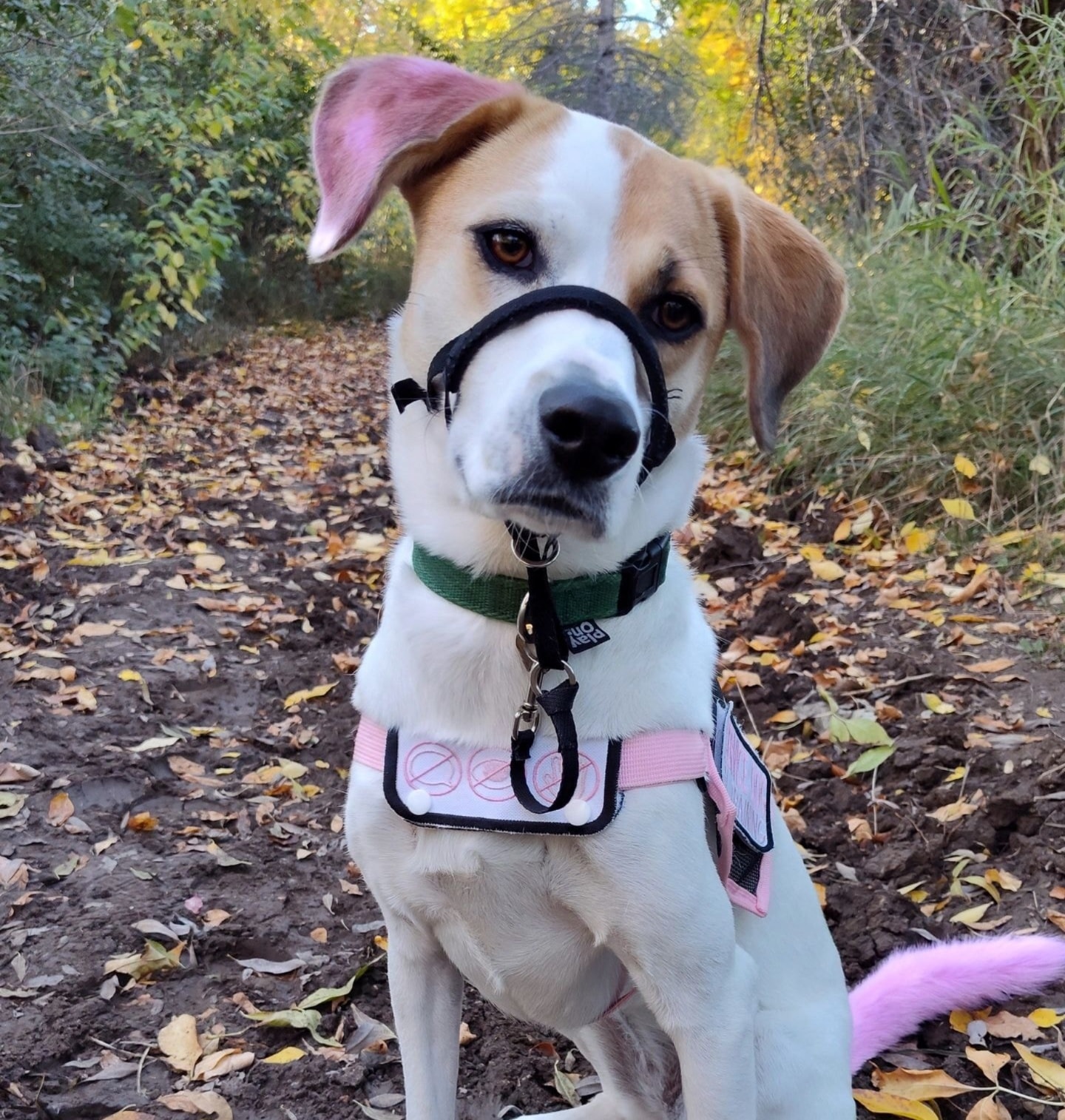
Meet Clover
Part-Time Service Dog & Household Matriarch
Every great mission has a heartbeat, and for this project, that heartbeat is Clover. Clover is Amanda's beloved Beagle mix who served faithfully as a Service Dog in Training, specializing in PTSD and anxiety intervention. During her working year, Clover's sharp intuition and training allowed Amanda to navigate the public world with confi
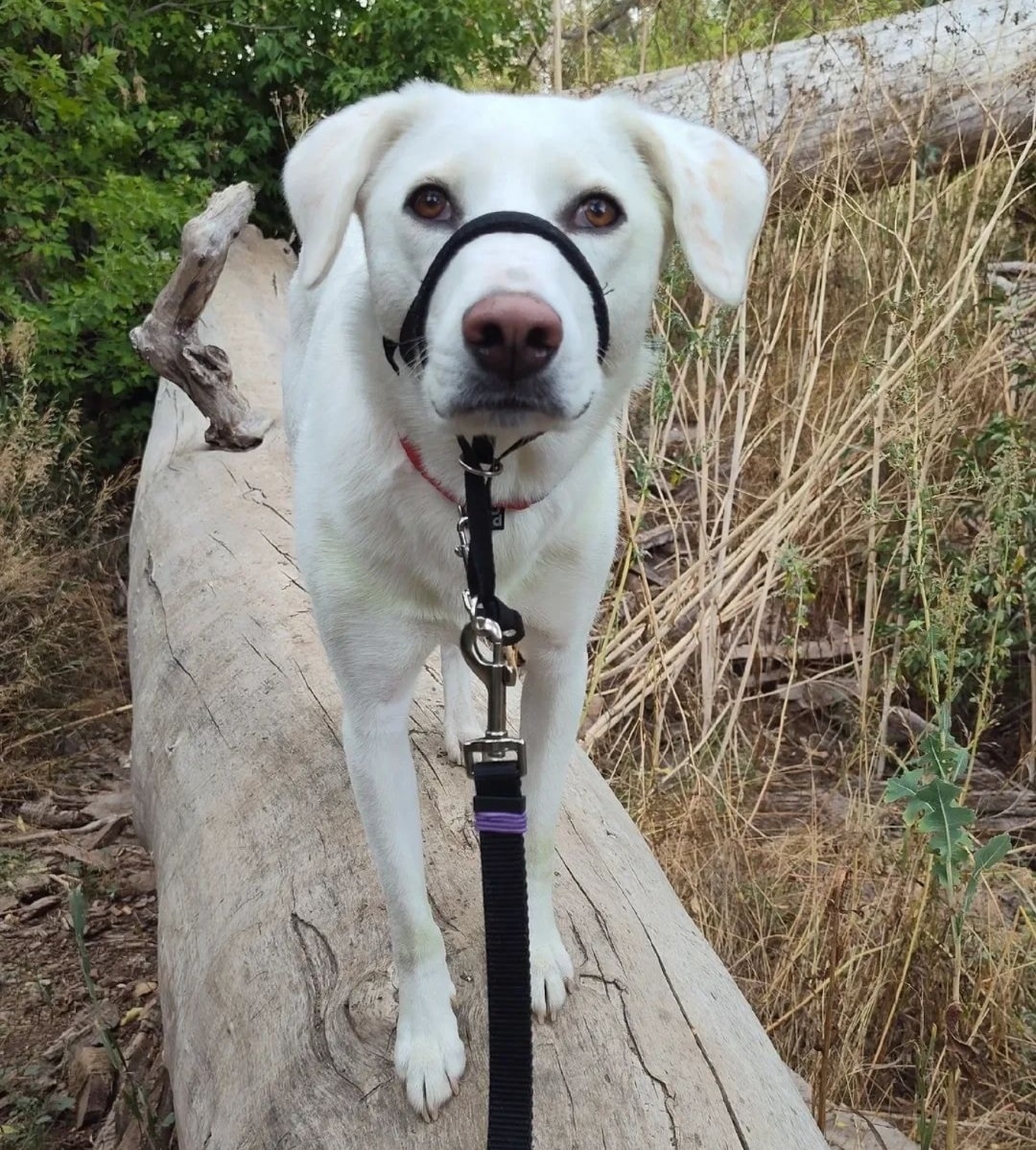
Meet Gnocchi
Boundless Energy & Comfort of the Household
While Clover serves as the specialized anchor outside home, her littermate sister, Gnocchi, provides the vital emotional balance that keeps the household thriving. Gnocchi is a vibrant Beagle mix who was adopted by Amanda on October 15, 2024, after being returned to the shelter through no fault of her own. Recognizing her sweet soul and deep

Frequently Asked Questions

Customer Feedback Speaks For Itself
Customer Feedback Speaks For Itself
A Title 1
Review 1
A Title 2
Review 2
A Title 3
Review 3